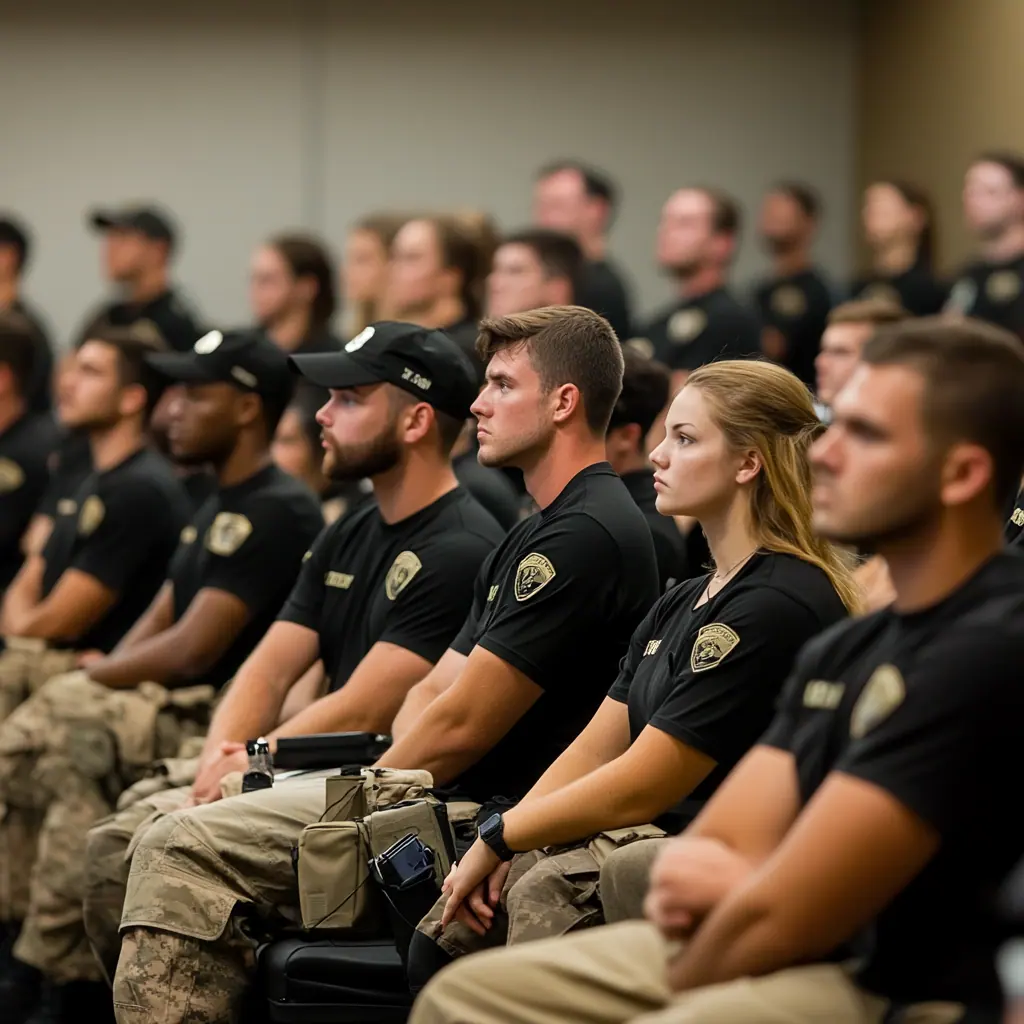
The basic methodology of executive protection (EP) is the prevention of threats and injury to your client. Being prepared also includes having the means to stop a sudden attacker from harming your client.
We must be armed, but not always necessarily with a firearm. In the EP business when and where we can carry a firearm legally is restrictive and its use is only as a last resort. Warning shots are strictly prohibited. In our business the discharge of a firearm is only for deadly force situations (firing only aimed shots). Brief Background:
Let’s examine the Tasers pros and cons for EP as a less lethal force option, made by Taser International, Inc. Any weapon that can protect your client during a sudden attack is a good weapon.
The Taser is a less-than-lethal weapon. It uses compressed nitrogen to launch two small barbed probes attached by wires and delivers 50,000 volts and each cycle of electrical current lasts five seconds. The maximum effective range of the M26 and X26 (a smaller model) is approximately 35 feet.
Having used the Taser personally; it has good incapacitating and stopping power against an aggressor. The effect on the aggressor being hit by a Taser includes disorientation, the ability to stand, a high heart rate and dehydration.
Pros:
• The Taser will subdue an attacker without a high potential of killing him. People have been killed by the use of Tasers. However, firearms kill people a lot more often. Most Taser deaths were due to improper usage of the less-than-lethal weapon.
• Several studies found the Taser to be safe and cause only a low incidence of serious injuries while de-escalating attack situations.
• The Bureau of ATF does not classify the Taser as a firearm, as it uses compressed nitrogen and not gunpowder as the propellant. The Taser is non-regulated and is sold on the retail market.
• The Taser gives EP agents a less lethal force option for incapacitating attackers with a well placed shot.
Cons:
• Historically, EP personnel do not fire a shot in attempted assassinations against principles. Whether time would allow the rapid shooting of a Teaser at an aggressor may be in question.
• Rules of engagement (ROE) for the Taser should be much like firearms; where a person is causing bodily harm to a client or an agent has reasonable grounds to believe a person will imminently harm his or her client. Having ROE policies for Taser use will prevent millions of dollars in potential liability judgments.
• Training with Tasers must become part of a comprehensive EP training program prior to use on an EP assignment. This is essential to become familiar with The Taser less-than-lethal weapon and its capabilities. Pre-deployment Taser training may be financially unsuitable for some EP agents or protective companies.
• Some countries outside of the US have restricted or banned the retail sales and use of the Taser.
• Non-lethal weapons are not always non-lethal, there is no such thing as zero mortality. Being shot by the Taser can significantly raise the heart rate and can cause cardiac arrest in some people due to ventricular fibrillation.
• People using drugs may have irregular heartbeats and suddenly die after being hit by the Taser.
• EP agents need all the tools available to them; however the combination of a firearm and a Taser may make things bulky under the suit coat.
Having the Necessary EP Tools:
Having the basic necessary tools is a must; ones that make you better prepared and assist you in accomplishing your EP mission. I believe it is up to the individual EP agent to decide which ones will work best for them and the security characteristics of the individual environment their clients will be operating in.
Look at the advantages and disadvantages of the particular weapon and make an educated decision to best accomplish the EP mission by conducting a mission analysis at the execution phase, taking into consideration the proper application of EP tasks, protecting the client and accomplishing the EP mission, before the mission commences. Any particular weapon chosen should fully support the EP program.
Always have the approval of the detail leader to use of weapon systems on the assignment, including types of less-than-lethal weapons, which may vary between areas of operations, for uniformity and legal compliance and mission-specific requirements. Your goal should be to use all necessary means available and to take all appropriate actions to protect your client with the authority of the detail leader.
Conclusion:
EP agents should still have deadly force available as an option when the EP mission dictates. The less-than-lethal Taser does not handicap EP agents, however it is just one more tool available for a well organized, equipped and most significantly trained EP agent. No matter what type of weapon you carry, lethal, less-than-lethal or both, it all boils down to training, because our training with seriousness of purpose and discipline is our weapon, our ace in the hole. Training is essential to help ensure EP mission success by preparing EP agents to face the challenges of today’s complex environment and is money well spent. Keep Safe and God Speed.
About Doc Rogers: Doc Rogers is the author of Corporate Executive Protection – A Manual for Inspiring Corporate Bodyguards and president and CEO of International Corporate Executive Protection Ltd. Doc has earned a Ph.D. in Security Administration from Southwest University and he is SE Asia’s leading expert on executive protection and corporate security. To learn how to make a full time living as a corporate bodyguard visit the websites below for more information.
http://www.trafford.com/Bookstore/BookDetail.aspx?Book=182707