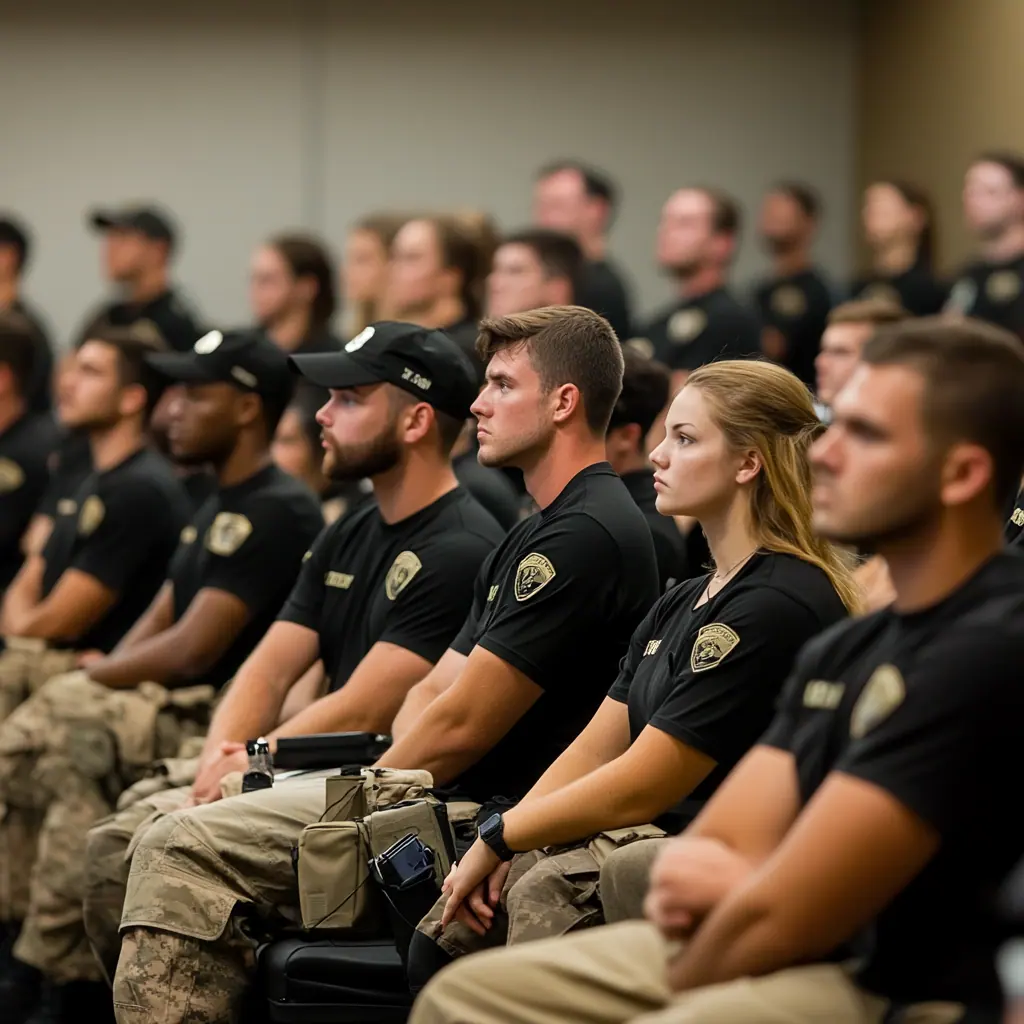
You finally get the nod from your supervisor; after months of doing “halls and walls, (standing posts), you are going to perform your first Protective Security Advance. In other words, you have been designated to proceed ahead of the principal’s security detail and will be charged with protecting your company’s principal and liaison with officials at each of the sites he will be visiting.
In this case, let’s assume your principal is a CEO of a firm headquartered in Chicago but he will be traveling to New York City to attend a three-day conference. Generally, especially in government protective security organizations, an advance is completed by a team of agents; however, in this case, you work for a moderately sized private sector company. This particular principal is frugal and is attempting to acquire top-notch security on the cheap.
First, although your agency’s travel representative should already be aware of your detail’s itinerary, it is usually the responsibility of the detail leader to inform the travel office that agents, or an agent, will be traveling in advance of the detail.
However, it is a good idea to contact your firm’s travel agent to ensure they have taken the appropriate steps concerning appropriate air travel, rental car reserved for you at the correct NYC airport, and hotel reservations for the entire time frame you will be in the Big Apple.
Generally, you will need about three to four days to advance the detail itinerary and the same number of days the protection team will be on the ground. Not only will you advance each site prior to the arrival of the detail in New York, but you will then hop and skip from site to site advancing each one and in essence staying one step in front of the security unit.
Secondly, you stop by the firm’s Threat Management division and retrieve a copy of the latest Threat Assessment relating to your principal’s trip. You review this document for any general and/or specific threats that could be dangerous to the principal while he is in New York. If he brings his family, you will review the sections covering his wife and children.
One of the most important sections of a threat assessment focuses on the health concerns of the principal and his family, specifically medical conditions and prescription medications–any health concerns that could place the principal and his family at risk while visiting any site on his itinerary.
Once you obtain the itinerary (be prepared to adapt to changes to scheduled meetings, dinners with clients, etc), you, as the advance agent, must match up these sites with healthcare facilities that specialize in the relevant health concerns of your client and/or family.
Barring that, know which local medical facilities are predisposed to handle Medical Evacuation by air to fly patients to the appropriate care. In large cities, most major hospitals will be able to accommodate your needs.
Of course, you will want to know what hospitals are designated as trauma centers and where these are located in New York. This material should already be in the Threat Assessment. Threat Assessments cover everything from medical vulnerabilities to the local crime tempo, where the police precincts are located in the area of responsibility in which the detail will be operational, and, of course, specific threats, such as kidnapping or death threats made against your principal or a member of his family.
These may have been obtained via law enforcement, security units, or sources inside and outside the government. If the Threat Assessment contains this more dangerous material, be sure to contact the intelligence source and comprehensively debrief them regarding the threat.
If a perpetrator is named, contact the local law enforcement agency that has jurisdiction for the area in which the perpetrator is located, notify them of this data, and send them any information they need. BE SURE TO OBTAIN A SPECIFIC POINT OF CONTACT IN THAT AGENCY WITH WHOM YOU WILL ROUTINELY COMMUNICATE THROUGHOUT, AND PERHAPS AFTER, THE PROTECTIVE DETAIL IS TERMINATED.Â
Include all this specific information in your routine briefings to the detail leader. He or she needs to know everything you learn and of course, all steps you have established at each site on the itinerary relating to the principal.
For example: Where will the principal be sitting at a restaurant, where will the stash car be located, are there any safe rooms you have set up, etc.? You can be outstanding in your liaison activities and establish the best security plan in the history of dignitary protection, but unless the detail leader and shift supervisors know what you have set up, it is all for naught.
Not everyone needs to know what you have set up, however. Inform each restaurant owner, museum curator, theater manager, etc., that you deal with that the information you have discussed must remain as confidential as possible.
Inform him or her that you know they have reporting requirements; just be sure you relate to them that confidentiality is crucial to operationalizing your plan.
Your next stop should be an ATM! You will need cash for taxis in New
York, once the protective detail is on the ground, you skip from one site to the next. Always have at least $200 in cash and a major credit card. While you are in New York before the details arrive, run your vehicular routes from site to site.
Suppose you intend to have a “stash car” available. In that case, you will have to rent this extra car along with the rest of the cars (yes, the advance man rents the cars, and you would do this via telephone from Chicago – so you can obtain the types of vehicles you need, you should contact the rental agency well in advance of your trip).
When you pick up the rental, try to make contact with the manager of the local rental car company (such as Hertz or Avis) and thank him or her for their outstanding support. Consider furnishing them with a letter of appreciation from the president of your firm.
Or, via your detail leader, request a letter of appreciation from the company’s President be sent to the immediate supervisor of the individual who made your reservations. Something like:“I would like to acknowledge the outstanding assistance Jane Doe, Manager, Mid-Town Manhattan Branch, provided ABC Security in supporting my agents during a recent protective security operation.”
Next, check your equipment, documents, notes, most recent Threat Assessment, reservations, etc. Don’t forget your passport! You don’t know how many times I have been on a detail in a domestic city and, without any indication, was informed to proceed to London or Paris to assist in advance in preparation of a meeting my principal decided he must attend. Of course, have your driver’s license, and any identification material, e.g. badges, credentials, lapel pins that your agency has provided you for use during the detail.
When you arrive in New York, pick up your rental. You are using this for the advance because it will be one of the protective detail vehicles. Typically, you would use public transportation for an advance in New York simply because it is difficult to find inexpensive parking.
If your principal is high profile, you may be able to acquire the services of a NYC Police Department Intelligence Division detective to assist. If that is the case, parking is a non-issue.
You will most likely be dealing with parking and traffic, so get used to it! Your detail will be moving through heavy traffic, and you will need to know what routes they will be using because you will have established the safest routes to each location.
The way an advance of this nature functions is that during the detail, you will advance one site (let’s say a restaurant), so as the motorcade is approaching the site, the shift leader will advise you via radio that he or she is 10 minutes, five minutes, two minutes, and then you will see them approaching.
At this point, you advise the shift leader, “I have you visual.”Then, you guide them into the motorcade exit location in front of the eatery. Do this by making yourself visual to the driver of the limousine or lead car, and once the limousine is where you want it to stage, you point your finger to the ground, indicating: “Stop here.”
Wait until the agent in charge exits the front passenger side of the limo and then you move a few paces forward so he can let the principal out of the car. Remember, your goal is to limit the time the principal is in plain sight and vulnerable.
So, you proceed forward and into the restaurant and to the table (generally at the rear of the restaurant or preferably a private room).
It is the job of the agent in charge to hold the door for the principal. In a restaurant setting, you and the agent in charge will sit at a table close to the principal; the shift leader or another agent will be present; however, the other agents will deal with staging the motorcade. These are concerns you have already worked out during the actual advance, e.g.
Where the motorcade is parked while the principal is at a site; seats for theater shows; picking the principal up via motorcade, perhaps with a police escort, on the airport’s tarmac, etc.
You may stay at the restaurant for approximately 20 minutes, proceed to the following site and do the same procedures as at the eatery.
This is what the advance agent does during the entire detail; he or she leapfrogs from one site to the other, ensuring that everything you have worked out regarding each site during the advance before the detail arrived in town has been set according to your agreement with that facility’s management.
Finally, you head to the airport, and if you have done your homework, your principal will wait for his or her flight via the particular airline’s Club (this also acts as an excellent safe haven while in the crowded airport).
At this point, you become part of the detail and escort the principal to the outbound flight and remain at the airport until the wheels are up–the plane is in the air, and the wheels are tucked into the plane.
In my experience, the advance is the portion of the protective service detail that will make or break how your agency is presented to the principal. For a successful outcome working as the advance agent, you must have each site well prepared to accommodate from a security and comfort perspective.
You must have communicated appropriately with local law enforcement for support and have handled the leapfrog portion of the advance in a precise manner. When all this runs smoothly, you will shine brighter than anyone else on the detail.
As the advance agent, you are as important to a movie or stage production as a director. Remember to be proactive and innovative and follow all the basic common sense steps involved in advance, and you will do just fine.